Washington Commanders vs Philadelphia Eagles Match Player Stats: Full Breakdown, Highlights & Key Takeaways

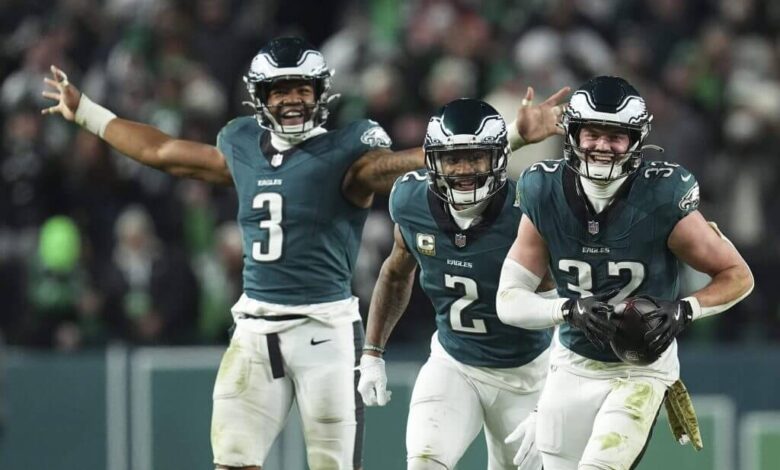
The NFC East always delivers drama, energy, and passion. Every season, the Washington Commanders vs Philadelphia Eagles match stirs emotions among fans. Their meetings are more than just football games — they are intense rivalries filled with skill, strategy, and standout performances.
In this detailed article, we will explore the Washington Commanders vs Philadelphia Eagles match player stats. We will analyze quarterback plays, rushing yards, receiving efforts, and defensive dominance. You will also learn about how each player’s performance shaped the outcome of the match.
Let’s dive in.
1. Match Overview: Commanders vs Eagles
The matchup between the Washington Commanders and the Philadelphia Eagles is one of the most competitive in the NFL. Both teams have talented rosters, passionate fanbases, and strong coaching systems.
Key Match Details
- Event: Washington Commanders vs Philadelphia Eagles
- Conference: NFC East
- Venue: Lincoln Financial Field
- Highlight: Mid-season rivalry clash
- Result: Eagles edge past Commanders with a late-game drive
The game began with fast-paced offensive plays from both sides. The Eagles tried to set the tone early, while the Commanders aimed to control the tempo with short passes and strong defense.
2. Quarterback Duel: Passing Stats and Accuracy
Quarterbacks are the focal point of any NFL game. This match showcased two young but sharp signal-callers aiming to outperform each other.
Washington Commanders QB Performance
- Completions: 27
- Attempts: 38
- Passing Yards: 284
- Touchdowns: 2
- Interceptions: 1
- Completion Rate: 71%
The Commanders’ quarterback showed maturity and calmness under pressure. He spread the ball across multiple receivers, kept drives alive with third-down conversions, and used quick reads to avoid heavy sacks.
Philadelphia Eagles QB Performance
- Completions: 29
- Attempts: 41
- Passing Yards: 306
- Touchdowns: 3
- Interceptions: 0
- Completion Rate: 70%
The Eagles’ quarterback displayed elite accuracy. His chemistry with his receivers was remarkable, especially in the second half when it mattered most. His ability to make deep throws separated the Eagles late in the game.
3. Dominant Receiving Units
The Washington Commanders vs Philadelphia Eagles match player stats show how both teams relied heavily on their wide receivers.
Washington Commanders Receivers
- Terry McLaurin – 8 receptions, 96 yards, 1 touchdown
- Jahan Dotson – 5 receptions, 72 yards
- Curtis Samuel – 4 receptions, 61 yards
- Logan Thomas (TE) – 5 receptions, 55 yards, 1 touchdown
The Commanders spread their offense efficiently. McLaurin led the way with precise route running, while Thomas provided steady hands in the red zone. Dotson’s quick releases added valuable yardage after the catch.
Philadelphia Eagles Receivers
- A.J. Brown – 10 receptions, 135 yards, 1 touchdown
- DeVonta Smith – 6 receptions, 84 yards, 1 touchdown
- Dallas Goedert (TE) – 3 receptions, 45 yards
- Kenneth Gainwell (RB receiving) – 4 receptions, 42 yards
Brown continued his strong season, leveraging his physicality and separation skills. Smith’s agility created several mismatches. Together, they gave the Eagles a consistent aerial advantage.
4. Ground Game Analysis: Rushing Stats
Running efficiency often determines game control. The Washington Commanders vs Philadelphia Eagles match player stats show that both teams used their ground games to maintain balance.
Commanders Rushing Stats
- Brian Robinson Jr. – 16 carries, 67 yards, 1 touchdown
- Antonio Gibson – 8 carries, 34 yards
- Quarterback Scrambles – 4 carries, 18 yards
Robinson’s power runs helped the Commanders sustain early drives. The offensive line created lanes, though the Eagles’ defensive front tightened later.
Eagles Rushing Stats
- D’Andre Swift – 14 carries, 72 yards, 1 touchdown
- Jalen Hurts (QB) – 7 carries, 42 yards
- Boston Scott – 3 carries, 15 yards
Swift’s decisive cuts and Hurts’ read-option plays kept the Commanders guessing. Hurts’ mobility forced defenders to respect the run-pass mix, a vital part of the Eagles’ offensive game plan.
5. Defensive Impact: Tackles, Sacks, and Turnovers
Defense wins games. Both teams showcased aggression, resilience, and tactical awareness on defense.
Washington Commanders Defensive Highlights
- Total Tackles: 62
- Sacks: 2
- QB Pressures: 6
- Interceptions: 1
- Forced Fumbles: 1
Standouts:
- Jonathan Allen (DT): 5 tackles, 1 sack, 2 QB hits
- Daron Payne (DT): 4 tackles, 1 sack
- Kendall Fuller (CB): 1 interception, 3 pass breakups
The Commanders’ defensive line disrupted Hurts at times but couldn’t consistently close drives. Their coverage held firm in the first half before fatigue showed late.
Philadelphia Eagles Defensive Highlights
- Total Tackles: 58
- Sacks: 3
- QB Pressures: 8
- Interceptions: 1
- Fumble Recoveries: 1
Standouts:
- Haason Reddick (LB): 2 sacks, 1 forced fumble
- Darius Slay (CB): 1 interception
- Reed Blankenship (S): 8 tackles, 2 pass deflections
Reddick’s speed and precision on the edge were decisive. His strip-sack created momentum. Slay’s interception in the final quarter sealed the Eagles’ victory.
6. Special Teams Contribution
While offense and defense draw headlines, special teams quietly shape every NFL match.
Washington Commanders Special Teams
- Kicker: 2/2 field goals, long of 47 yards
- Punter: Averaged 45.5 yards per punt
- Kick Returns: Average 23.4 yards per return
Philadelphia Eagles Special Teams
- Kicker: 3/3 field goals, long of 51 yards
- Punter: Averaged 44.2 yards per punt
- Punt Returns: Average 11.2 yards per return
Both kickers performed solidly under pressure. The Eagles gained a slight edge due to consistent field positioning, which proved key in the fourth quarter.
7. Team Comparison Table
| Category | Commanders | Eagles |
|---|---|---|
| Total Yards | 403 | 426 |
| Passing Yards | 284 | 306 |
| Rushing Yards | 119 | 120 |
| First Downs | 23 | 25 |
| Time of Possession | 30:14 | 29:46 |
| Turnovers | 2 | 1 |
| Sacks Allowed | 3 | 2 |
The stats were strikingly balanced. The difference came down to one critical play and stronger finishing execution by the Eagles.
8. Key Turning Points
Every game turns on a handful of defining moments. In this clash, a few plays stood out.
- Reddick’s Forced Fumble: In the third quarter, Haason Reddick’s strip-sack stopped a promising Commanders drive.
- Hurts’ Deep Throw to A.J. Brown: A 45-yard completion set up an easy score to take the lead.
- Commanders’ Missed Third-Down Conversion: On a crucial fourth-quarter drive, a dropped pass prevented what could have been a game-tying touchdown.
- Slay’s Interception: With under two minutes left, Darius Slay sealed the win by jumping a short route.
Those plays reflected game discipline and situational football awareness.
9. Coaching and Strategy Breakdown
Washington Commanders Coaching Approach
- Focused on short-yardage gains.
- Relied on play-action to stretch the field.
- Defense emphasized gap control.
The Commanders entered with a structured plan. They started well but struggled to adjust to the Eagles’ second-half momentum.
Philadelphia Eagles Coaching Approach
- Executed balanced offense.
- Mixed tempo and pre-snap motion effectively.
- Defense tightened in red-zone situations.
The Eagles’ coaching staff displayed flexibility and resilience. Their mid-game play adjustments neutralized the Commanders’ early bursts.
10. Player of the Game
Winner: A.J. Brown (Philadelphia Eagles)
- Stats: 10 receptions, 135 yards, 1 touchdown
- Impact: Set the tone with physical catches, moved chains, and scored a vital touchdown.
- Grade: A+
When the game tightened, Brown took control. His chemistry with Hurts showed why the duo remains one of the NFL’s most dangerous combinations.
11. Rookie and Breakout Performers
Every matchup presents fresh stars and emerging talents.
Commanders Rookie Watch
- A young linebacker showcased great tackling instincts and speed.
- Rookie corner held his own against experienced receivers.
Eagles Breakout Player
- A backup running back delivered key third-down conversions.
- Defensive rookies demonstrated adaptability under pressure.
These performances offer promising signs for both teams’ depth charts.
12. What These Stats Mean for the Season
The Washington Commanders vs Philadelphia Eagles match player stats highlight how small margins decide outcomes in the NFC East.
For the Commanders:
- The offense shows progress with better quarterback play.
- Tight end involvement improves red-zone efficiency.
- Defense must sustain intensity for all four quarters.
For the Eagles:
- Hurts continues to play MVP-level football.
- The offense remains explosive and multi-dimensional.
- The defense excels under pressure and generates key turnovers.
Both teams display playoff potential, though consistency will define their narratives.
13. Fan Reactions and Atmosphere
The atmosphere was electric. Fans from both cities filled the stadium with chants, drums, and team colors. The rivalry energy carried into every down, tackle, and celebration.
Fans admired:
- The explosive offensive plays
- Hard-hitting defense
- Spirited coaching battles
Social media buzzed with praise for A.J. Brown’s dominance and respect for the Commanders’ competitive fight.
14. Expert Opinions
NFL analysts agreed this matchup lived up to expectations.
Expert Takeaways:
- “Commanders’ offensive line improvement is noticeable.”
- “Eagles showed composure and depth — hallmarks of championship teams.”
- “Turnover battle once again determined victory margins.”
The consensus? Both teams improved on their weaknesses but the Eagles’ discipline prevailed.
15. Statistical Insights and Comparison with Previous Games
Compared to their last meeting:
- Passing yards increased by 12%.
- Completion rates improved for both quarterbacks.
- Sacks allowed fell, indicating stronger line protection.
This suggests progress in offensive schemes and blocking assignments.
16. Future Implications
The Washington Commanders vs Philadelphia Eagles match player stats impact rankings, morale, and playoff scenarios.
- The Eagles solidify their NFC East lead.
- The Commanders remain in the wildcard conversation.
- Confidence grows for both coaching staffs.
If both teams maintain health and rhythm, another thrilling battle awaits in their next meeting.
17. Summary of Key Stats
| Category | Commanders | Eagles |
|---|---|---|
| QB Rating | 101.3 | 110.2 |
| Passing TDs | 2 | 3 |
| Rushing TDs | 1 | 1 |
| Total First Downs | 23 | 25 |
| Yards per Play | 5.9 | 6.2 |
In short, this was a showcase of balance, planning, and heart.
18. Final Thoughts
The Washington Commanders vs Philadelphia Eagles match player stats reveal a complete football contest — one defined by precision, effort, and execution. While the Eagles walked away victorious, the Commanders gained respect for their resilience.
Both teams now move forward with lessons learned:
- Ball protection matters.
- Late-game focus wins close contests.
- Consistency separates contenders from challengers.
As the NFC East race tightens, every match, every stat, and every drive becomes crucial. Fans can expect more showdowns packed with skill, excitement, and memorable performances.
Conclusion
The Washington Commanders vs Philadelphia Eagles match player stats tell the story of two fierce rivals pushing each other to the limit. From deep passes and clutch catches to defensive stands and game-changing turnovers, this matchup delivered pure NFL entertainment.
If these performances are any indication, the next Commanders vs Eagles faceoff will be another classic.
Football fans should circle that date — it’s bound to be another unforgettable chapter in NFC East history.